Avoid your inquiry is delay response, please enter your WhatsApp/Skype along with the message, so we can contact you at the very first time.
We will reply you within 24 hours. If for urgent case, please add WhatsApp/WeChat: ,. Or call directly.
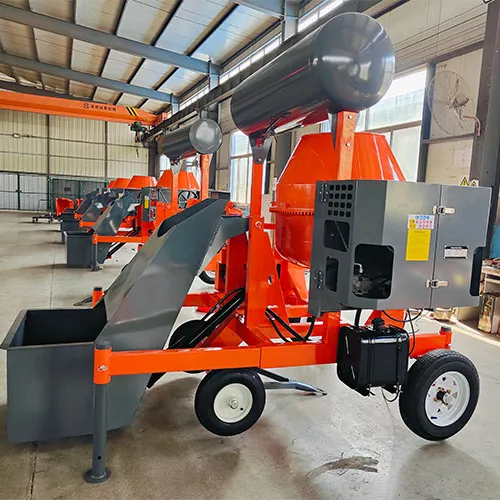
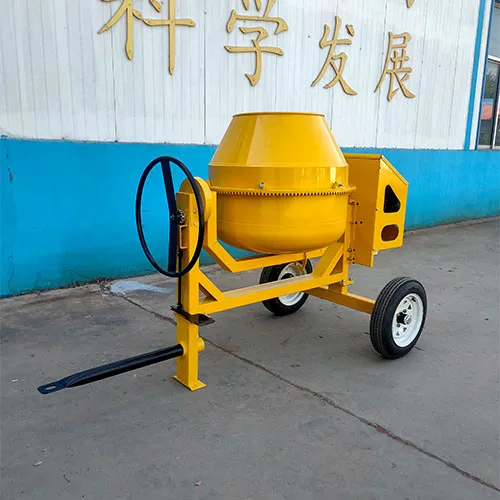
When it comes to construction, few machines are as essential as the concrete mixer. But with so many options on the market, choosing the right one can be a daunting task. Today, we are taking an in-depth look at a specific category of equipment: the manual discharge concrete mixer with a capacity range of **260 to 800 liters**.
Whether you are a small contractor, a farmer doing repairs, or a rental business owner, this guide will help you understand why these machines are a popular choice and how to select the perfect model for your needs.
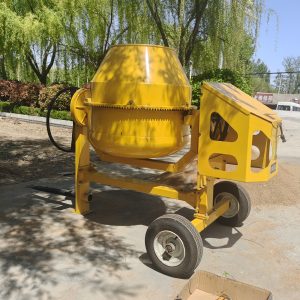
In an age of automation, the manual discharge (or tilting drum) mixer remains a steadfast favorite. Why? It comes down to control and simplicity.
– **Precision:** You are in complete control of the discharge rate. This allows you to pour concrete exactly where you need it, minimizing waste and mess on site .
– **Simplicity:** With fewer moving parts than hydraulic or automatic discharge systems, these mixers are easier to maintain and less likely to break down .
– **Cost-Effective:** They generally have a lower upfront cost and lower maintenance expenses, making them an excellent return on investment.
One of the defining features of this mixer line is the ability to choose your power source based on your specific working conditions. This adaptability is what makes these mixers a global favorite .
### 1. Gasoline Engine
– **Best For:** Remote job sites, residential projects, and locations where electricity is unreliable .
– **Advantages:** Highly portable and easy to refuel. Often equipped with reliable engines (such as Honda or Lifan) that start easily in cold weather .
– **Considerations:** Generally higher fuel costs than diesel and slightly higher noise levels.
### 2. Diesel Engine
– **Best For:** Heavy-duty continuous operation and off-grid construction .
– **Advantages:** Excellent fuel economy and long engine life. Diesel engines provide high torque, which is beneficial for mixing stiff concrete mixes .
– **Considerations:** Higher initial investment for the engine and a heavier machine.
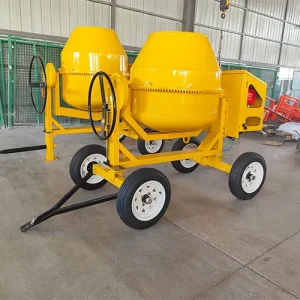
FC concrete mixer
The capacity of your mixing drum directly dictates your productivity. This product line offers a range of sizes to fit small-scale repairs and large-scale pours .
– **260L – 350L (The Lightweight):** Ideal for DIY enthusiasts, small repair jobs, and plumbers or tilers working on small to medium projects. Easy to move and manage .
– **400L – 500L (The Versatile Standard):** This is the “sweet spot” for many contractors. Perfect for building foundations, floors, and general construction. They balance capacity and portability effectively .
– **600L – 800L (The Heavy Lifter):** Built for commercial projects and high-volume tasks. These large drums require a powerful 9HP engine or 3KW motor to ensure efficient mixing .
### Technical Snapshot: Specifications to Consider
When comparing models, pay close attention to these details (based on data for this range) :
| Feature | Specification | Benefit |
| :— | :— | :— |
| **Drum RPM** | 18-25 RPM | Ensures proper mixing speed without segregation . |
| **Drum Thickness** | 3mm (Upper) / 4mm (Lower) | Provides durability and longevity, with a thicker bottom to resist wear . |
| **Engine Power (Gas/Diesel)** | 5.5HP – 9HP | Provides sufficient torque for different batch sizes . |
| **Motor Power (Electric)** | 1.5KW – 3KW | Standard power draw for 260L to 800L capacity . |
| **Productivity** | 2m³/h – 22m³/h | Varies widely by model and batch size . |
## Construction Features and Durability
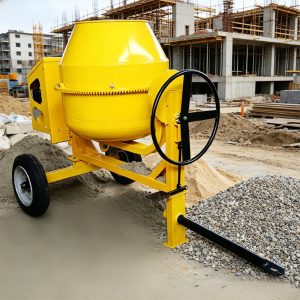
– **All-Steel Construction:** Provides a long lifespan and resistance to the rough-and-tumble nature of construction sites .
– **Cast Iron Gear Ring:** Offers steady and silent operation, reducing maintenance issues over the long term .
– **Portability:** Large wheels (often 520mm) ensure the machine can be moved easily across uneven terrain .
## Final Thoughts: The Perfect Mix
The manual discharge concrete mixer offers a flexible, durable, and simple solution for a wide range of construction needs. By selecting the right combination of **power source** (Gas/Diesel/Electric) and **capacity** (260L-800L), you can ensure that your equipment is perfectly matched to the demands of the job, providing reliable service for years to come.
—
*Disclaimer: Specifications and engine options may vary by manufacturer. Always consult the technical data sheet provided by the supplier before purchasing.*
Views: 71
 English English
 Spanish
 Portuguese
 French
 Arabic
 Dutch
Dutch Russian