Avoid your inquiry is delay response, please enter your WhatsApp/Skype along with the message, so we can contact you at the very first time.
We will reply you within 24 hours. If for urgent case, please add WhatsApp/WeChat: ,. Or call directly.
On a busy construction site, delays often start at the mixer. Batches vary. Crews wait. Costs climb. Our fix? Pick a concrete mixer that fits your job, your power, and your schedule.
To choose the right concrete mixer, size for the amount of concrete and duty cycle, match power (gas/diesel/electric concrete), decide on mobility (portable, trailer, or plant), pick mixer type (drum, pan, twin-shaft, continuous), and check support: OEM/ODM options, spares, and certifications.
A concrete mixer is a machine that combines cement, aggregate, water, and admixtures to mix concrete for your construction project. The mixer typically has a rotating drum or a horizontal tank with blades. As the drum turns, concrete is mixed inside the drum and discharged when uniform.
Mixers consist of a drive (motor or engine), a vessel, blades or paddles, a frame, and controls. Mixers are commonly used to deliver concrete near where crews will place concrete. Compared with mixing by hand, a mixer can handle small batch or large quantities of concrete, improves quality, and can save time.
“A mixer that fits the job reduces rework and keeps the flow of concrete steady.”
There are various types of concrete mixers. Each type of mixer serves different needs in the construction industry:
Mixers are often used at the edge of a slab or near forms. Unlike batch mixers, continuous mixers don’t stop; they run while crews make concrete and mix the concrete at pace.
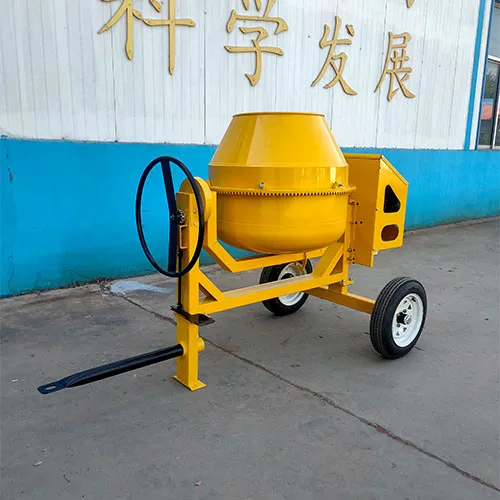
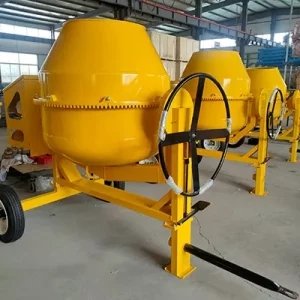
Portable concrete mixers are often mounted on frames with wheels. A portable drum is suitable for small pours, repairs, and small-scale concrete jobs. A typical portable unit helps crews work faster than mixing the cement by hand.
Mobile mixers and mixer truck / concrete mixer truck options can deliver concrete from plant to site. A trailer-mounted unit bridges the gap: tow it with a pickup, set up, then mix cement where you need it. For city work, portable mixers shine; for spread-out sites, mixer truck logistics matter.
Internal resources you might find useful:
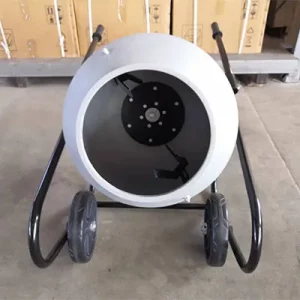
An electric concrete mixer is quiet and clean; it fits warehouses, hospitals, and schools. Electric concrete drives cut fuel handling and meet green goals. Diesel shines where grid power is weak. For rentals, diesel offers flexibility. For factories and precast concrete, three-phase stationary mixers are steady and simple.
| Site condition | Best option | Why |
|---|---|---|
| Indoor or noise-sensitive | Electric concrete mixer | Quiet, low emissions |
| Remote or off-grid | Diesel drum | Portable, fuel on site |
| Plant / precast and prestressed concrete | 3-phase twin-shaft | Uniform, high output |
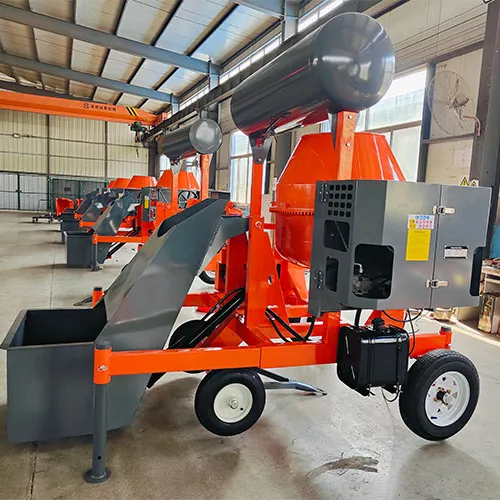
Self-loading concrete units carry materials, mix concrete, and lift the drum to place concrete. Self-loading concrete mixers add speed where labor is tight or where roads are rough. They’re great for large construction sites, hillside roads, and remote culverts. If you need ready-mix concrete quality on the move, this can be the answer.
“For mountain roads, self-loading concrete mixers kept the flow of concrete steady with fewer trucks.”
Good care keeps concrete mixers are essential assets online. Grease bearings, inspect belts, and keep guards tight. Lockout/tagout before maintenance. Record cycles to plan wear parts. You’ll save time and keep output steady.
Checklist
Daily: clean spatter inside the drum.
Weekly: check gearboxes, look for leaks.
Monthly: verify amps/RPM, blade gaps.
Pseudo-chart — Uptime impact of maintenance
What size mixer should I pick?
Match the amount of concrete per hour and your concrete batch size. If you need 3–4 cubic yards of concrete per morning, a mid-size drum mixer can work. Plants may need twin-shaft mixers.
Is a pan mixer better for mortar?
Yes. A pan mixer blends stiff mixes and mortar fast. It also handles pavers and dry-cast.
When do I choose continuous mixers?
Pick continuous mixers for long pulls—curbs, soil-cement, or long road slabs. They produce concrete non-stop, unlike batch mixers.
Do I need a trailer or a truck?
A trailer unit suits nearby work and small crews. A mixer truck makes sense for longer hauls and deliver concrete from a distant plant.
What certifications should I look for?
Look for CE/ISO and safety features. For dust and silica, follow regulations such as OSHA’s standards
. For ready-mix specs, see ASTM C94
and guidance like ACI 304R
How do I compare different concrete mixers?
List your construction project goals, decide on mixer type and power, then check support and OEM/ODM options. Evaluate batch mixers vs continuous concrete mixers based on pour pattern.
Views: 69
 English English
 Spanish
 Portuguese
 French
 Arabic
 Dutch
Dutch Russian