Get a Quote ×

Avoid your inquiry is delay response, please enter your WhatsApp/Skype along with the message, so we can contact you at the very first time.

    We will reply you within 24 hours. If for urgent case, please add WhatsApp/WeChat: ,. Or call directly.

    09
    2026/06

    Small Batch, Big Efficiency: Why the 260L–800L Concrete Mixer is the Workhorse You Actually Need

    When most people picture a concrete mixer, they imagine a massive truck turning a giant drum on a highway. But the truth is, the vast majority of concrete mixing doesn’t happen on skyscraper sites. It happens in backyards, repair shops, small farms, and medium-sized construction projects.
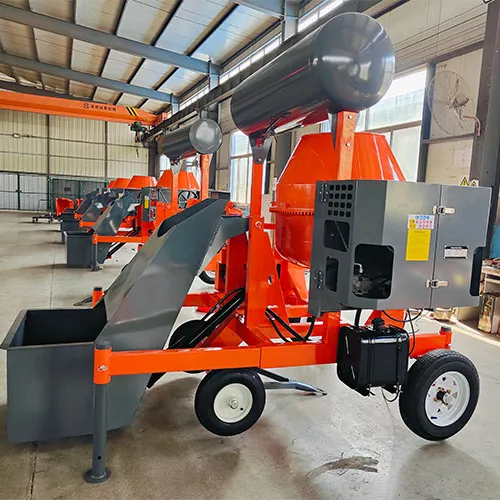
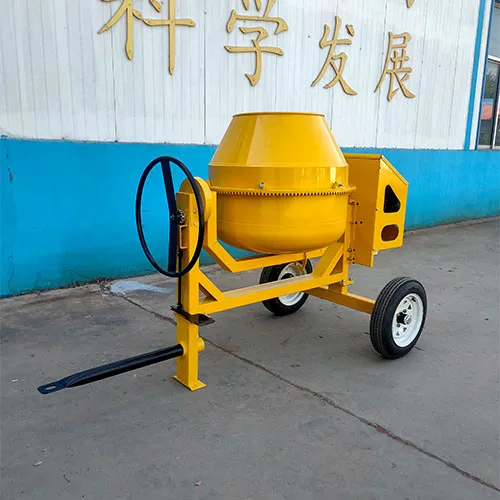
    That’s where our factory comes in.
    Part 1: Understanding the Size Range – What Does 260L to 800L Actually Mean?

    First, a quick clarification. The rated capacity (260L, 350L, 500L, 800L) refers to the total volume of the drum. The actual output of mixed concrete is roughly 60–70% of that number, depending on the mix design.

    Here’s a practical breakdown:

    Mixer SizeApprox. Output per batchWhat you can make
    260L0.18–0.20 m³ (~6–7 ft³)8–10 fence posts, a small shed slab
    350L0.24–0.27 m³ (~8.5–9.5 ft³)Garden paths, small patios, garage aprons
    500L0.35–0.40 m³ (~12–14 ft³)Driveway sections, house footings, machine bases
    800L0.55–0.60 m³ (~19–21 ft³)Larger slabs, retaining wall blocks, agricultural floors

    In short: if your job requires between one wheelbarrow and twenty wheelbarrows of concrete per batch, you are in our sweet spot.


    Part 2: Who Needs a 260L–800L Mixer? (Real-World Use Scenarios)

    Unlike a truck mixer (which requires a concrete supplier, a schedule, and a minimum order), our small mixers are independent, on-demand, and portable.

    Here are the most common real-world scenarios where these machines save the day.

    1. The Small Contractor – Multiple Small Jobs Per Day

    Scenario: You run a 2–3 person crew doing residential work. One morning you pour a set of stair footings (0.6 m³). In the afternoon, you repair a cracked driveway apron (0.4 m³). Tomorrow, you set mailbox posts for a new subdivision.

    Why a 500L mixer works: You don’t want to order a full truck for tiny pours. You also don’t want to mix 40 bags by hand. With a 500L mixer, you batch exactly what you need, move it with a wheelbarrow or dolly, and clean it out in 10 minutes. No waiting. No waste. No leftover concrete hardening in a truck.

    2. The Farmer & Rural Property Owner

    Scenario: You need to pour a floor in a new cattle barn. Then a feed trough. Then a set of post bases for a hay storage shed. The nearest ready-mix plant is 90 minutes away, and they charge a “small load” fee that doubles your price.

    Why a 350L or 800L mixer works: You buy cement, sand, and gravel by the pallet or the ton. The mixer sits in the corner of the barn. Over a week, you pour exactly 8 cubic meters – in small, manageable batches. You control the mix strength (no “guess work” from a truck). And you never pay a delivery fee again.

    3. The Landscape & Hardscape Specialist

    Scenario: You are building a curved garden wall with decorative block. The concrete is just for the footing and the bond beam. The job site is tight – no room for a truck. Plus, the homeowner doesn’t want 20 yards of concrete dumped on their new driveway.

    Why a 260L mixer works: It’s small enough to tow behind a pickup or lift onto a trailer. You park it right next to the footing trench. Mix. Pour. Repeat. The noise is low, the footprint is tiny, and you can clean it with a garden hose.

    4. The Precast / Block Maker

    Scenario: You manufacture concrete blocks, pavers, or garden edging. You need a consistent, repeatable mix – batch after batch – for a small production line.

    Why a 500L or 800L mixer works: Our mixers provide excellent homogeneity (uniform distribution of cement, sand, and aggregate). You can set a fixed water-to-cement ratio, and because the batch size is consistent, every block has the same strength and appearance. Many of our customers run two 800L mixers side-by-side for continuous production.

    5. The Rental Yard

    Scenario: You own a tool rental business. Contractors and homeowners come in asking for a “small mixer” for a weekend project.

    Why a 260L or 350L mixer is perfect: They are durable (steel drum, reinforced frame), simple to operate (a few levers and a start button), and forgiving of occasional abuse. Your customers can pour a patio, a shed base, or a set of steps, then return the machine – and you clean it and rent it again next weekend.


    Part 3: The Advantages – Why Choose Our 260L–800L Mixers?

    Not all small mixers are built the same. Here is what makes our factory’s machines genuinely better.

    Advantage 1: You Control the Mix – No Waste, No Guesswork

    With a truck, you get what they send. With a bag-and-mixer setup, you decide:

    • Strength: Need 4,000 psi for a garage floor? No problem. Just a garden path? Reduce the cement.

    • Workability: Adding a plasticizer? Fiber reinforcement? Color pigment? You add it yourself, directly to the drum.

    • Quantity: Need exactly 0.3 m³? Mix 0.3 m³. Not a cubic yard more.

    Result: Zero waste. Exactly what you need, every time.

    Advantage 2: Fresh Concrete, Every Batch

    Concrete starts setting the moment water touches cement. With a truck, that clock starts ticking before it arrives. With our mixer, you mix on-site, right when you’re ready to pour.

    • No “can I get an extra 30 minutes?”

    • No adding water to re-soften old concrete (which ruins strength).

    • No scramble to finish before the truck leaves.

    You mix. You pour. It sets. You move on.

    Advantage 3: Compact & Portable

    Our 260L–800L mixers are designed to fit through a standard gate, roll over uneven ground, and load into a pickup or small trailer.

    • Wheel or tow options: Many models include pneumatic tires and a towing hitch.

    • Small footprint: An 800L mixer takes up about the same floor space as a pallet of bags.

    • Low height: You can pour directly into a wheelbarrow or, with a short chute extension, directly into forms.

    Advantage 4: Built for Abuse

    We manufacture these mixers in our own factory – not a generic import rebrand. That means:

    • Thicker steel drums (4–6mm depending on model)

    • Reinforced bearings that don’t fail after one season

    • Sealed motors with thermal overload protection

    • Easy-access maintenance ports for cleaning and inspection

    These are not “homeowner weekend” mixers. They are light-industrial machines meant for daily use.

    Advantage 5: Simple Enough for One Person

    You don’t need a trained operator. One person can:

    • Load the drum (sand, gravel, cement)

    • Add water (either manually or via a metered water tank – available on many models)

    • Start the mixer

    • Dump the finished concrete into a wheelbarrow or directly onto the job

    Total learning time: about 15 minutes.


    Part 4: How to Use Your 260L–800L Mixer – A Step-by-Step Guide

    Proper use makes the difference between a mixer that lasts 15 years and one that lasts 15 months. Follow this sequence every time.

    Step 1: Position the Mixer

    Place it as close to the pour location as possible, on level, firm ground. If the mixer tips, the drum can warp. Engage the wheel locks or chock the wheels.

    Step 2: Pre-Inspect

    • Check oil in the gearbox (if applicable)

    • Inspect the drum for leftover concrete from last use

    • Spin the drum by hand – it should rotate smoothly

    • Verify the discharge chute is clean and properly attached

    Step 3: Add a Small Amount of Water First

    This is the most common mistake people make. Always add a little water (5–10 liters) before any dry materials. Why? It lubricates the drum and blades, preventing dry mix from sticking to the steel.

    Step 4: Add Coarse Aggregate (Gravel)

    Start with the largest material. This helps break up any leftover residue and creates space for the sand and cement to fill.

    Step 5: Add Cement & Sand

    Add your cement, then sand. Let the drum rotate 5–10 times to dry-mix these materials. You will see the color become uniform (light gray for Portland cement mixes).

    Step 6: Add the Remaining Water

    Add water gradually while the drum is turning. Stop frequently to check the slump (how wet the mix is). You want it wet enough to pour, but not so wet that it separates. A good rule: when you pull a trowel through the mix, the edges should stay sharp, not collapse.

    Step 7: Mix for 3–5 Minutes

    This is critical. Many people rush this step. A full 3–5 minutes of mixing ensures every grain of sand and every stone is coated in cement paste. Short mixing times produce weak, honeycombed concrete.

    Step 8: Discharge

    Tilt the drum (or open the discharge gate, depending on your model) and direct the concrete into a wheelbarrow, bucket, or directly into forms. Keep the drum rotating during discharge – it keeps the mix fluid.

    Step 9: Clean Immediately

    This is not optional. After every single batch:

    • Add clean water and a few stones (or a specific cleaning solution)

    • Run the mixer for 2–3 minutes

    • Dump the wash water onto a gravel area (never down a drain)

    • Scrape any remaining buildup with a putty knife or scraper

    Concrete that hardens inside the drum will require chisels and hours of work to remove. Prevent it in 2 minutes.


    Part 5: Which Size Should You Choose?

    Here is a simple decision guide based on your typical project:

    If you mostly do…Choose…
    Fence posts, mailboxes, small repairs, light landscaping260L
    Garden paths, small patios, steps, shed slabs, rental fleet350L
    Driveway sections, house footings, garage floors, small foundations500L
    Retaining walls, agricultural floors, small precast production, continuous work800L

    Still unsure? Here is the one-question test: How many bags of cement do you want to carry per batch?

    • 5 bags or less → 260L or 350L

    • 6–8 bags → 500L

    • 10–12 bags → 800L


    Part 6: Maintenance That Takes 10 Minutes a Week

    A well-maintained 260L–800L mixer will outlast its original motor. Do these three things every week of use:

    1. Grease the bearings – Two or three pumps per bearing. Over-greasing is as bad as under-greasing.

    2. Check the drum blades – They wear down over time. When the gap between blade and drum exceeds about 1 cm, it’s time to replace them (we stock spares).

    3. Inspect the electrical cord and switch – Moisture is the enemy. If the plug or switch feels warm, stop and repair.

    Once a year, open the gearbox (if equipped), drain the old oil, and refill with SAE 90 or the specified lubricant.


    Conclusion: Big Enough for the Job, Small Enough to Own

    The 260L to 800L concrete mixer is not a compromise. It is a deliberate choice for people who value control, efficiency, and independence.

    • Contractors use them to eliminate waste and schedule headaches.

    • Farmers use them to avoid expensive delivery fees.

    • Precast makers use them for repeatable, high-quality batches.

    • Rental yards use them because they are simple and durable.

    And we build them – in our factory – to be exactly that: simple, durable, and effective.

    If you are tired of hand-mixing bags or waiting for a truck that never arrives on time, it is time to put one of our 260L, 300L 350L,400L 450L  500L,600L 700L or 800L mixers to work.

    Have questions about which model fits your specific projects? Contact our team. We’ll help you match the machine to the job – not oversell you on something you don’t need.


    Roll the drum. Pour the concrete. Build something that lasts.

    — The Factory Team

    P.S. All our concrete mixers come with a 12-month warranty on  lifetime technical support. We don’t just sell machines – we make sure they keep turning.

    Views: 125

    leave us a message