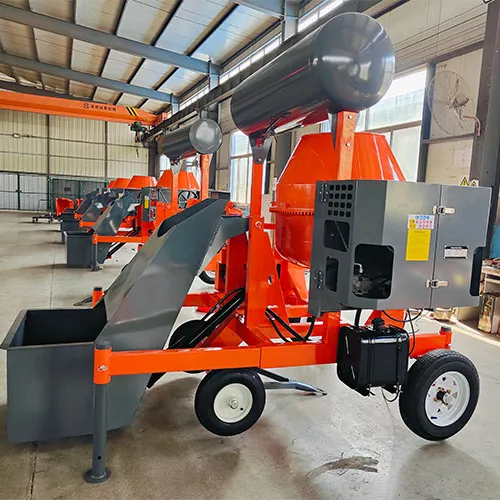
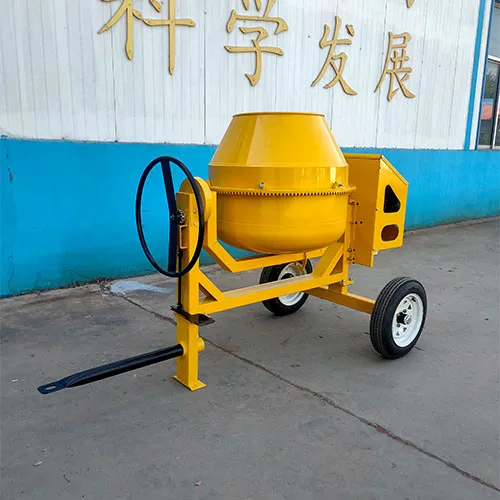
Avoid your inquiry is delay response, please enter your WhatsApp/Skype along with the message, so we can contact you at the very first time.
We will reply you within 24 hours. If for urgent case, please add WhatsApp/WeChat: ,. Or call directly.
Mixing concrete by hand can be exhausting work.
For fellow DIY-ers on projects that require large amounts of cement or concrete, ‘how to use a concrete mixer’ is often a key consideration that ends up saving them a lot of time, money, and labour.
If you’re in this boat and want to master how to use a concrete mixer, the good news is that these mixers are both affordable to buy or hire and simple to operate.
No matter what kind of project you are taking on, the basic operating steps for using a mixer will be the same. Our tips on how to get the most out of your mixer will therefore be beneficial, whether you are pouring a building’s foundation or creating a few steps for your garden.
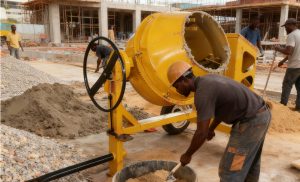
Whether you are hiring a concrete mixer for a large construction job or just a few bags for your garden, it’s important that you choose a cement mixer that is up for the job and can help you get things done efficiently.
Concrete mixers make mixing large amounts of concrete and cement easy. To be effective, concrete needs to be mixed well and quickly, which is hard to do by hand. Mixers are ideal for all kinds of projects, from small do-it-yourself home improvement projects to large commercial construction projects.
If you want to know how to use a cement mixer properly, we’re here to help you with these simple steps. CHICCA is the go-to place for hiring cement mixers and building equipment. If you’re ready to start your project, get your equipment from us today.
There is a wide range of mixers to choose from depending on the job you need to complete.
With so many options, it can be difficult to know what will work best for you. Here are some things to keep in mind when choosing a cement mixer:
One of the most important things to look for when you choose a cement mixer is size.
If you are taking on a large project, which will require a lot of concrete, you should hire a larger mixer, such as a drum or barrel mixer, which can prepare more concrete at once, making your job easier.
If you’re just mixing small batches of concrete, then a smaller machine will be sufficient.
Cement mixers come in three types: planetary, drum, and continuous feed.
Each type has its own advantages and disadvantages:
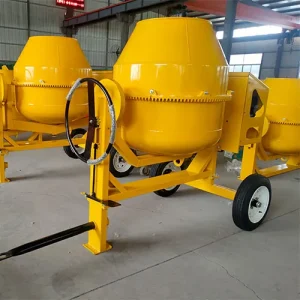
FA600 concrete mixer
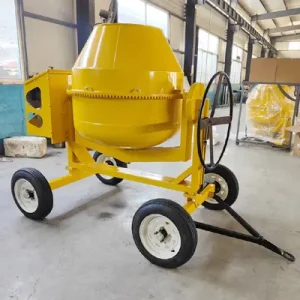
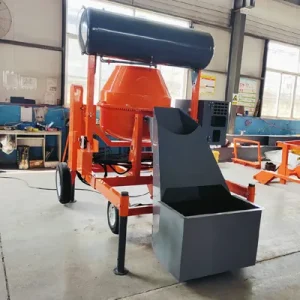
When working with cement-based products, always wear eye protection and waterproof gloves. Machine mixed concrete should be mixed in a barrel-type mixer.
Step 1
Measure the recommended water amount for the number of bags to be added to the mixer and pour half of the water into the mixer (each 80-pound bag will require about 3 quarts of water). If using liquid cement color, add to the mixing water.
NOTE: water should be added to the mixer before the dry mix.
Step 2
Turn the mixer on and add the dry mix into the mixer. Allow the concrete to mix for about a minute and then add the remaining water as necessary.
Step 3
Mix the concrete for about 3-5 minutes, until a uniform, workable consistency is achieved. If additional water is needed, add small amounts of water sparingly. Properly mixed concrete should look like thick oatmeal and should hold its shape when it is squeezed in a gloved hand.
NOTE: the more water that is added to the mix the weaker it becomes; adding one extra quart of water per 80 lb bag can reduce the strength of the concrete by up to 40%.
Step 4
Keep the mixer running and dump the concrete into a wheelbarrow for transporting to your work area.
Views: 140
 English English
 Spanish
 Portuguese
 French
 Arabic
 Dutch
Dutch Russian